 senn-tech
Proxmox VE 9.2: Dynamic Load Balancer for the Cluster
With Proxmox VE 9.2 (May 21, 2026), the 9.x generation matures further. The foundation was already upgraded with 9.0 in August 2025 to Debian 13 "Trixie"; 9.2 adds on top the feature cluster operators have been waiting for: a dynamic load balancer.
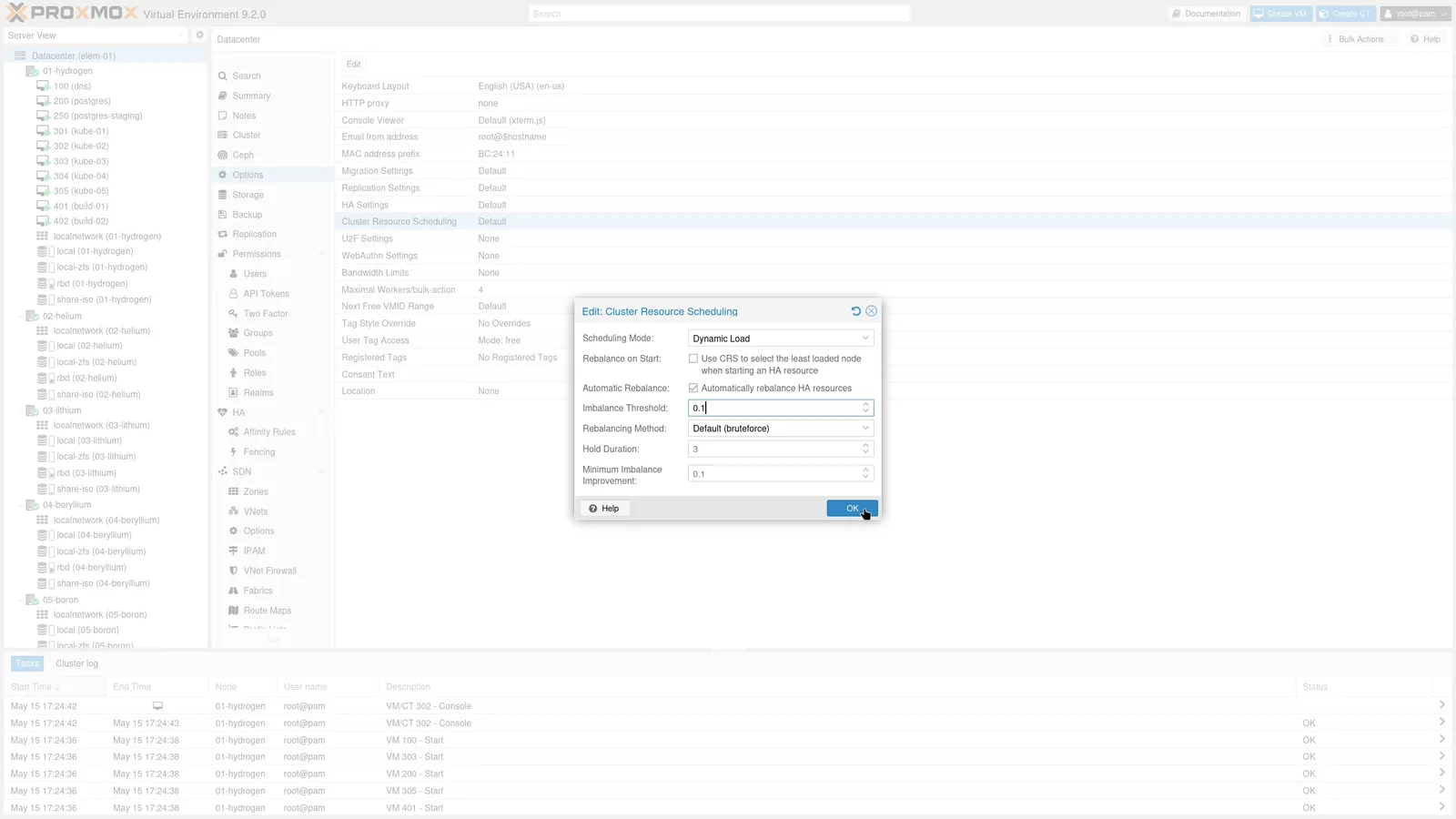
The Highlight: Dynamic Load Balancer
Previously, the Cluster Resource Scheduler (CRS) mainly decided where a VM would land—at startup or in an HA event. The new dynamic load balancer goes further: It monitors load during live operation and automatically migrates VMs when a node runs hot while another has spare capacity. The result is a more even utilization across the entire cluster—without anyone having to manually migrate VMs at night.
Built on the Foundation of 9.0
Much of what makes 9.2 strong arrived already with the 9.0 generation:
- Debian 13 "Trixie" as the base, with kernel 6.14, QEMU 10, LXC 6, Ceph Squid 19.2, and ZFS 2.3.
- Snapshots on thick-provisioned LVM-shared storage—long awaited for environments with FC- or iSCSI-SAN.
- ZFS RAIDZ extension: new disks can be added to existing RAIDZ pools with minimal downtime.
- SDN "Fabrics": complex, scalable network topologies can be cleanly modeled in software-defined networking.
What This Means in Self-Operation
For us, Proxmox VE has been the backbone of virtualization since the switch from VMware—KVM-VMs and LXC containers side by side, without licensing traps. The dynamic load balancer removes the manual work in the HA cluster that otherwise lingers in the midmarket: the constant fine-tuning of which VM belongs where.
Before the Upgrade
The jump from 8 to 9 is simultaneously a Debian major upgrade (12 → 13) and, per the official guide, belongs in a maintenance window—with a fresh backup as a fallback option. Those already on 9.0 or 9.1 can upgrade to 9.2 regularly via the package manager.
Conclusion
9.2 is not a loud release, but a useful one: The dynamic load balancer fills a real gap in cluster operations, the Debian 13 foundation is solid, and the storage enhancements of the 9.x series pay off especially in SAN environments. Open source, without licensing traps—so virtualization stays in your own hands.
Further Reading
What exactly does the new dynamic load balancer in Proxmox VE 9.2 do?+
The Cluster Resource Scheduler previously decided where a VM would land mainly at startup or in an HA event. The new dynamic load balancer monitors load during live operation and automatically migrates VMs when a node runs hot while another has spare capacity. The result is more even utilization across the entire cluster, without anyone having to manually migrate VMs at night.
How involved is the jump from Proxmox VE 8 to 9.2?+
The jump from 8 to 9 is simultaneously a Debian major upgrade from version 12 to 13 and, per the official guide, belongs in a maintenance window with a fresh backup as a fallback. Those already on 9.0 or 9.1, however, upgrade to 9.2 regularly via the package manager. Plan the major upgrade carefully, since the new Debian 13 foundation changes the underlying base.
Which storage enhancements of the 9.x series pay off in SAN environments?+
Snapshots on thick-provisioned LVM-shared storage are newly possible, long awaited for environments with FC or iSCSI SANs. In addition, the ZFS RAIDZ extension lets you add new disks to existing RAIDZ pools with minimal downtime. SDN fabrics round this out for complex, scalable network topologies. Especially in SAN settings these features noticeably improve day-to-day operations.