 senn-tech
Helpdesk in-house: Zammad as a Ticket System
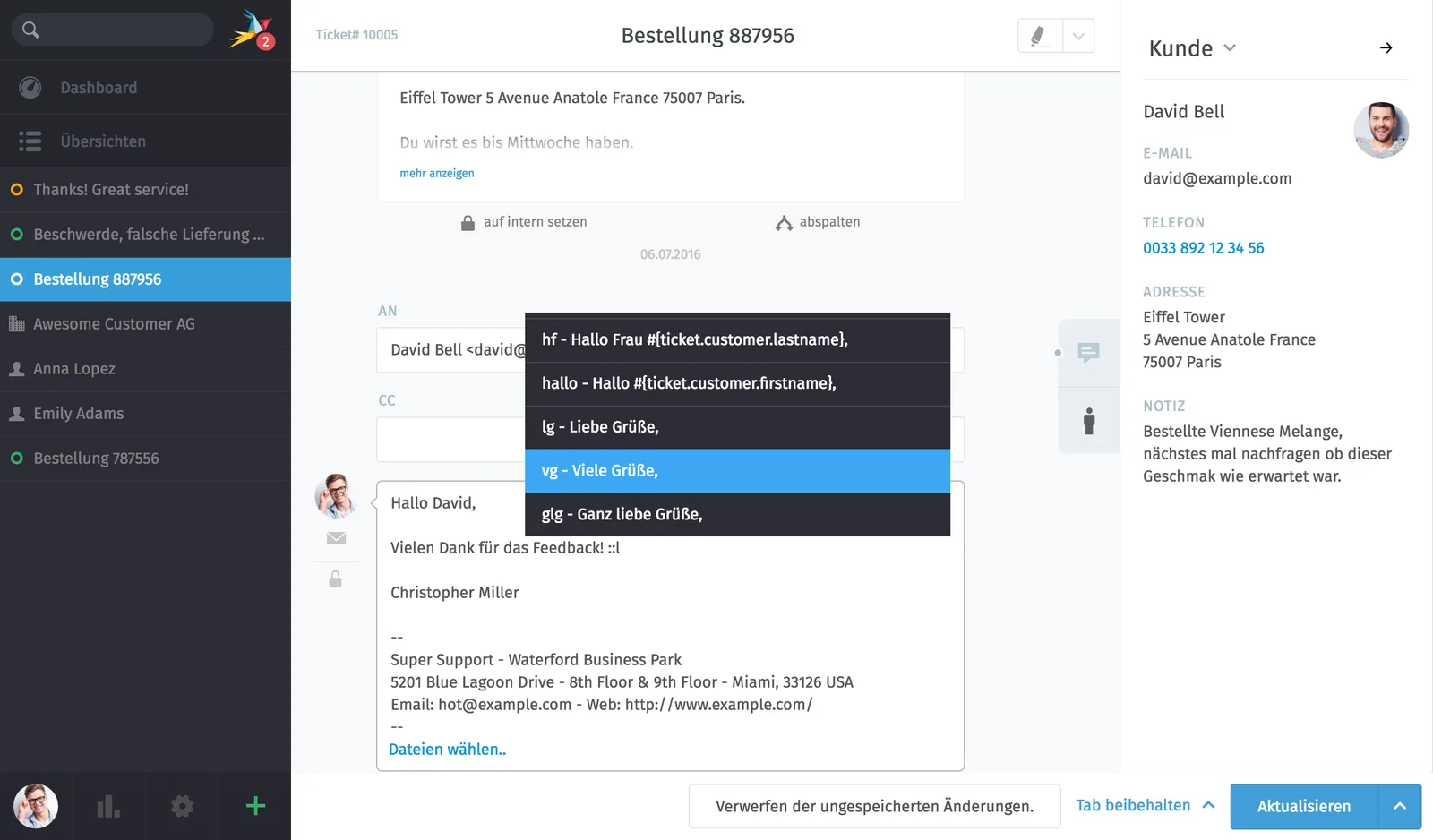
Email support is chaos; who replied, what’s open, who’s waiting how long? A ticket system brings order. Zammad is our tool for that, because it integrates cleanly into existing mail infrastructure.
Why Not a SaaS Helpdesk
Zendesk, Freshdesk & Co. are good, but customer data doesn’t belong on foreign servers. With Zammad, we have tickets, attachments, and communication under our own control. From a GDPR perspective, that’s a significant difference.
What Zammad Brings
- Mail-to-Ticket: Emails to
support@are automatically turned into tickets. Replies go back to the customer by email, they notice nothing of the system. - SLA Management: Escalations, deadlines, reminders. Whoever maintains critical systems needs this.
- Knowledge Base: Write articles, categorize, multilingual, queryable via API.
- Roles & Groups: Agents, customers, managers, finely controllable.
The installation is a Docker stack: Zammad, Elasticsearch, PostgreSQL. Resource requirements are moderate, 2 vCPUs, 4 GB RAM for small teams.
Cleanly Integrated: Mail and SSO
Zammad lives by its mail connection; best linked to your own mail server via IMAP/SMTP, so the entire support communication stays in-house. Login can be connected via OIDC to Keycloak, so agents use the same single sign-on as for all other internal services, and departed employees centrally lose access.
The Difference from a Simple Ticket List
What sets Zammad apart from a shared mailbox: Transparency. You see which agent is handling which ticket, how long it’s been open, which customers have recurring problems. That’s not micromanagement, but the foundation for process improvement.
What It Is Not
Not an ITIL monster. No CMDB, no change management, no project tool. Zammad does tickets. For everything else, there are specialized tools.
Conclusion
From the second support staff member on, an in-house helpdesk pays off immediately: you see what's open and who's working on what. With Zammad the decision is easy: spin up the Docker stack, configure the mail channel, done.
Further Reading
Why self-hosted Zammad instead of Zendesk or Freshdesk?+
Zendesk, Freshdesk & Co. are good, but customer data doesn't belong on foreign servers. With Zammad, tickets, attachments, and all communication stay under your own control, a significant difference for GDPR. Best of all, you link it via IMAP/SMTP to your own mail server, so support communication stays in-house too.
What resources and integration effort does self-hosting require?+
The installation is a Docker stack of Zammad, Elasticsearch, and PostgreSQL; needs are moderate; 2 vCPUs and 4 GB RAM for small teams. Mail connects via IMAP/SMTP to your own server, and login optionally via OIDC to Keycloak. That way agents use the same single sign-on, and departed employees lose access centrally.
When does Zammad pay off, and what can't it do?+
The dividing line is not headcount but who owns an open request, which a shared mailbox never answers. If you expect the ticket system to double as a CMDB or change-management tool, Zammad is the wrong choice and an ITIL suite is the honest one.